
My parents turned Thanksgiving into a public attack because I refused to cover my sister Natalie’s $5,000 luxury rent.
I used to think the worst thing a family could do was abandon you.
That Thanksgiving taught me there are worse things.
A family can sit close enough to pass you the rolls, know exactly what is happening, and still choose the person hurting you.
What I remember first is not the turkey.
It is butter and cinnamon under my mother’s perfume.
It is the sharp scrape of my father’s chair on the hardwood.
It is my eight-year-old son Tyler lifting his face from the floor with confusion so pure it broke something in me that never grew back the same.
The house was warm.
The candles were bright.
The dining room was full of people who had known me since I was born.
None of that made us safe.
Tyler had worn a navy sweater because he wanted to look nice for Thanksgiving.
He asked me in the bathroom mirror if the collar looked “too babyish,” and Megan, my ten-year-old daughter, helped him flatten one stubborn piece of hair with water from the sink.
They were giggling when we left our house.
Megan had packed two colored pencils in her coat pocket because she wanted to draw at Grandma’s table if the adults got boring.
Tyler wanted to tell my father about his science project.
I wanted one peaceful holiday.
By 6:18 p.m. on Thanksgiving Thursday, Tyler’s sweater was twisted sideways, Megan had a red handprint on her cheek, and I knew with a clarity that felt almost cold that I would never bring my children back into that house again.
All of it began with Natalie.
My sister’s apartment cost $5,000 a month.
Five thousand dollars for a luxury downtown place she could not afford, would not leave, and had somehow turned into my responsibility.
Natalie was thirty-four, employed when it suited her, childless, and permanently fragile whenever money came up.
She could spend a weekend ordering takeout and new clothes, but if rent appeared on the calendar, my mother suddenly spoke about stress as if Natalie were carrying the whole country on her shoulders.
My parents had done this for years.
If Natalie overspent, she was anxious.
If Natalie quit another job, she was exhausted.
If Natalie needed money, the family was supposed to gather around her like she had survived something.
But when I worked full-time, raised Tyler and Megan alone, paid a mortgage, packed lunches, handled ear infections, school pickups, late fees, grocery runs, and every small emergency that comes with children, my mother told me I was dramatic.
That was our family math.
Natalie’s problems were emergencies.
Mine were excuses.
At 2:09 p.m. that afternoon, my mother texted me a photo of Natalie’s rent statement.
The number was right there in black type.
$5,000 due.
No message came with it except, “We’ll discuss tonight.”
I was standing in my kitchen when it arrived, looking at my own mortgage confirmation on my bank app and Megan’s field-trip permission slip under a magnet on the fridge.
Tyler’s urgent-care receipt from two weeks earlier was still folded in the junk drawer because I had not decided which bill to delay to cover it.
I remember laughing once, but it was not a happy sound.
It was the sound you make when the insult arrives dressed as a family obligation.
I did not answer my mother’s text.
That was my first mistake, according to her.
According to me, it was the first honest thing I had done all day.
Dinner began with everyone pretending we were normal.
My mother Elaine’s dining room looked beautiful in the way some rooms look beautiful when nobody is allowed to relax inside them.
White tablecloth.
Crystal glasses.
Polished silver.
The good china.
A turkey so perfect it could have been photographed for a grocery store ad.
Elaine moved around correcting small things nobody else could see.
A fork angled wrong.
A napkin not folded tightly enough.
A candle too close to the centerpiece.
My father Richard sat at the head of the table with a beer in his hand and the expression of a man who believed the whole room belonged to him.
Uncle Warren was loud before the blessing ended.
Aunt Linda complained about her knee.
Cousin Michael kept checking his phone.
Uncle James and Aunt Susan smiled at everything because smiling was the family’s favorite way of avoiding responsibility.
Natalie came late.
She wore a cream dress, glossy heels, and the tired little face she used whenever she wanted someone else to clean up the mess she had made.
She brought no dish.
No flowers.
No apology.
“I almost didn’t make it,” she sighed, loud enough for the table to hear.
My mother touched her arm like Natalie had come home from surgery.
“Oh, sweetheart.”
Tyler leaned toward me and whispered, “Is Aunt Natalie sick?”
“No,” I whispered back.
I almost said, “Just spoiled.”
I did not.
I was still doing that thing mothers do when they think swallowing the truth will keep the peace for their children.
For the first hour, plates moved and glasses clinked.
Megan complimented the pie crust.
My mother did not hear her.
Tyler tried to explain his science project to my father.
Richard cut him off halfway through to ask Natalie about the lobby in her building.
Natalie brightened.
She described the marble, the elevator, the gym, the rooftop area, and the doorman who remembered her coffee order.
My son went quiet beside me.
He folded his napkin in half, then quarters, then smaller than it needed to be.
A child notices when adults decide who matters.
Then my mother cleared her throat.
That small sound had controlled me since childhood.
It meant the warm part was over.
It meant somebody was about to be corrected in front of witnesses.
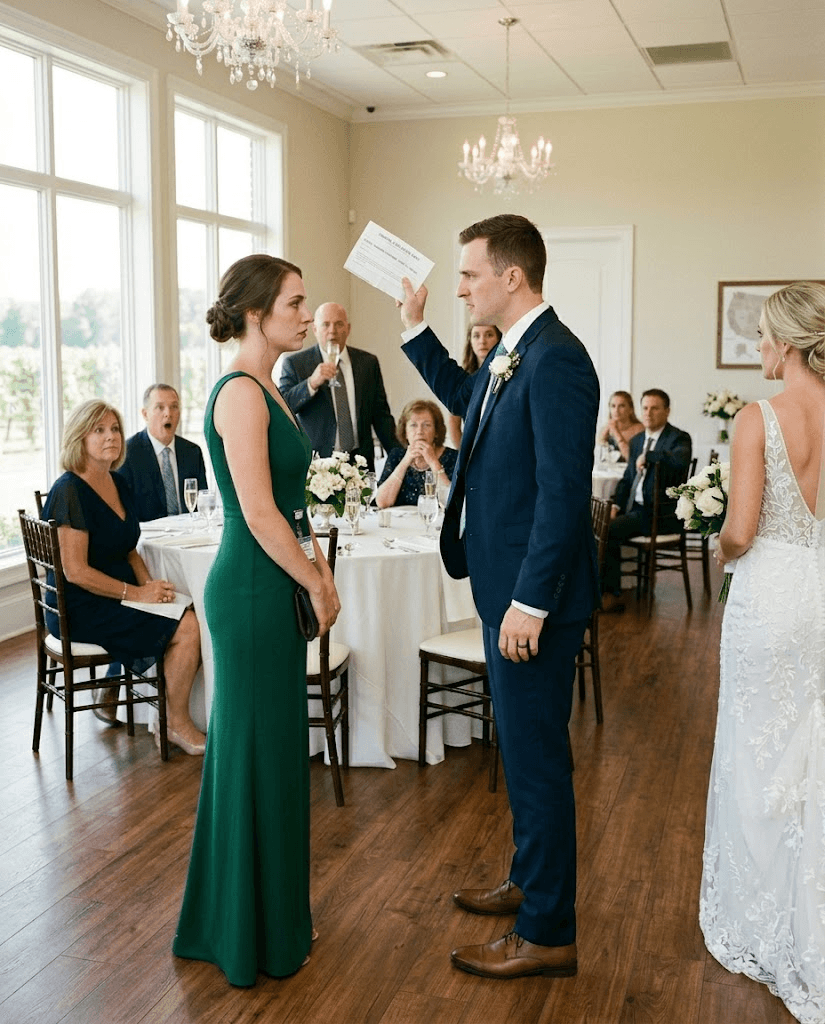
“We need to discuss Natalie’s financial situation,” Elaine announced.
The table went still.
Natalie lowered her eyes before anyone had accused her of anything.
Richard set his beer down carefully.
“Your sister needs help with rent,” he said, looking straight at me.
I waited for the rest.
There was no rest.
“Five thousand a month,” he said. “You’re going to cover it.”
For a second, I thought I had misheard him.
“I’m sorry?”
“Don’t make me repeat myself.”
My mother leaned forward.
“Natalie cannot be expected to move right now. She is under tremendous stress.”
“She lives in a luxury apartment downtown,” I said. “If she can’t afford it, she needs to move.”
Natalie’s eyes filled with tears so quickly that even as scared as I was, I almost admired the timing.
“See?” she whispered. “I told you she would say that. She doesn’t care if I end up homeless.”
“Homeless?” I stared at her. “Natalie, you could rent somewhere affordable tomorrow. You just don’t want to.”
My mother’s face hardened.
“You have a house.”
“I have a mortgage.”
“You have stability.”
“I worked for it.”
“You have children,” Natalie snapped, as if Tyler and Megan were coupons I had redeemed for sympathy. “People feel sorry for single mothers. Everyone helps you.”
The room did not correct her.
Not one person said that no one had helped me when Tyler’s school called about a fever and I had to leave work in the middle of a shift.
Not one person said that no one watched Megan when I was choosing between missing pay and asking a neighbor for one more favor.
Not one person said that the children’s father had left the daily work of parenting to me, and my parents had treated that as proof that I should be even stronger.
Nobody said anything.
Silence can be a vote.
That table had been voting against me for years.
“I am not paying your rent,” I said.
Elaine’s eyes narrowed.
“You will not embarrass this family by letting your sister struggle.”
“Mom, her rent is more than my mortgage.”
“Then budget better.”
“I have two children.”
“And Natalie is my child,” she snapped.
There it was.
The real hierarchy.
Served right beside the mashed potatoes.
Some families do not ask for help.
They assign sacrifice, then call you cruel for noticing the receipt.
I looked at Natalie.
“Move somewhere you can afford.”
Her helpless face disappeared.
What came forward was resentment, clean and practiced.
“You always thought you were better than me,” she said. “Good grades. Scholarships. Your little house. Your perfect responsible act. You act like you earned everything.”
“I did earn it.”
My father’s fist hit the table.
The glasses jumped.
Forks froze halfway to mouths.
A candle flame bent and straightened.
Gravy slid from a serving spoon and left a brown stain across the white cloth.
Uncle Warren stared at his plate.
Aunt Linda stared at her napkin.
Cousin Michael stared at his phone.
Everybody waited to see how much pain they could avoid by staying still.
Nobody moved.
Richard stood, and his chair scraped behind him.
“Your mother asked you to help your sister.”
“No,” I said. “She demanded I pay for Natalie’s choices.”
I saw his hand move before I believed my father would touch me.
Then his fingers closed around my throat.
My shoulder hit the wall first.
The back of my head struck a framed family photo hard enough to rattle the glass.
Air vanished.
The chandelier blurred into hot yellow circles.
My hands clawed at his wrist, and I could feel the tendons under his skin tighten as he leaned closer.
“Useless daughter,” he hissed. “After everything we did for you, this is how you repay us?”
I heard Megan scream.
I heard my mother say, “Maybe now she’ll listen.”
I heard Natalie make a small sound.
It was not shock.
It was satisfaction.
For one ugly heartbeat, I wanted to hurt him back.
I wanted to grab the nearest glass and make that room understand what fear felt like when it came from my side of the table.
Then I saw my children.
Rage had to become something harder to do.
Control.
Tyler’s chair screamed backward.
“Let her go!” my little boy shouted.
He ran at Richard with both arms out.
My father let go of me.
I dropped hard, coughing, one hand on my throat and one hand already reaching for Tyler.
Tyler was still coming.
He was brave in the terrible way children are brave before they understand what adults are willing to do.
Richard turned toward him.
His shoe caught Tyler before I could reach him.
I will not dress that up.
A grown man kicked my eight-year-old son for trying to protect his mother.
Tyler hit the side of the china cabinet and folded to the floor, gasping in that silent way children gasp when they are too shocked to cry.
Megan flew to him.
“Tyler!”
My mother slapped Megan across the face.
“Stop making a scene,” Elaine snapped.
That was the line that woke me completely.
Not the hand on my throat.
Not the kick.
Not even the laughter that started low at the far end of the table.
It was my mother looking at my daughter’s red cheek and calling her pain a scene.
Something inside me went quiet.
Not calm.
Not weak.
Quiet in the way a locked door is quiet.
Cousin Michael’s phone was raised.
For half a second, I thought he was calling for help.
Then I saw the red recording dot.
Uncle Warren let out one short laugh.
Aunt Linda whispered, “Oh my God,” but she did not stand.
Natalie stepped back from the table, pale now, because she had finally realized this was not just a dinner argument.
Aunt Susan covered her mouth.
“Richard,” she whispered. “That is a child.”
Richard looked at her like she had betrayed him.
I crawled to Tyler.
My throat burned every time I swallowed.
Megan was shaking so hard her whole body seemed smaller.
I pulled both of them against me and stood because there are moments when your body does not ask permission from your fear.
It just chooses the children.
“Move,” I said.
My father blocked the dining room doorway.
“You’re not leaving until you apologize to your mother.”
Tyler whimpered against my coat.
Megan’s fingers dug into my sleeve.
I looked at Richard’s face, then Elaine’s, then Natalie’s.
I had spent my whole life hoping one of them would look sorry.
That night taught me that waiting for remorse can become its own kind of prison.
Cousin Michael lowered his phone.
His screen lit with an outgoing message.
He had sent the video to someone.
I did not know who.
I only knew that he had recorded my children being hurt before he had lifted a finger to help them.
I pushed past Richard.
Maybe he was too surprised to stop me.
Maybe Aunt Susan finally moved enough to step between us.
Maybe God gives mothers one clean second when they need it most.
I do not know.
I got my children out the front door and into the cold.
The porch had a small American flag clipped to the rail, snapping softly in the wind like nothing had happened inside.
Tyler cried when I buckled him into the car seat, not because he was a baby, but because the bravery had left his body and pain had moved in.
Megan kept saying, “I’m sorry, Mom.”
Over and over.
“I’m sorry.”
I put my hands on both sides of her face.
“You did nothing wrong.”
Her cheek was hot under my palm.
My own voice sounded strange, thin and rough from my throat.
At 7:04 p.m., I drove away from my parents’ house with my children in the back seat and gravy still on the sleeve of my sweater.
I did not go home first.
I went to the hospital intake desk.
I gave my name.
I gave Tyler’s name.
I gave Megan’s name.
I told the nurse, “My father assaulted me, then hurt my children.”
Saying it out loud made the room tilt.
The nurse did not flinch.
She handed me forms, spoke gently to Tyler, and asked Megan if she wanted water.
That small kindness nearly broke me.
The hospital intake form asked what happened.
The police report later asked the same thing.
The school counselor’s note on Monday asked it a third way.
Each time, I wrote or said the truth.
Richard grabbed my throat.
Richard kicked Tyler when he tried to protect me.
Elaine slapped Megan.
Relatives witnessed it.
Some laughed.
One recorded.
There is a kind of relief in documents.
They do not ask you to make cruelty prettier.
They do not say, “But he’s your father.”
They leave blank lines and wait for facts.
The next morning, my phone filled with messages.
My mother wrote first.
“You ruined Thanksgiving.”
Then Natalie.
“You always make everything about your kids.”
Then Richard.
“You had better not embarrass this family more than you already have.”
I took screenshots.
I saved voicemails.
I wrote down times.
8:13 a.m.
8:41 a.m.
9:06 a.m.
For years, I had explained too much and documented too little.
That changed.
By Monday, I had changed the locks on my house, told the school office that my parents were not allowed to pick up Tyler or Megan, and given the counselor a copy of the police report number.
I hated how official everything sounded.
Emergency contacts.
Authorized pickup list.
Incident statement.
Protective order petition.
It felt like turning my family into paperwork.
Then Tyler walked into the kitchen wearing the same navy sweater because he said he did not want Grandpa to make him hate it.
I sat down on the floor and cried into my hands.
He came over and patted my shoulder like he was the adult.
That was when I knew paperwork was not cold.
Paperwork was a fence.
It was the first fence I had ever built strong enough to keep my children away from people who thought blood gave them permission.
Aunt Susan called me two days later.
She was crying before I answered.
“I should have stood up sooner,” she said.
“Yes,” I told her.
It was not cruel.
It was true.
She told me Michael had sent the video to his girlfriend by accident while trying to send it to Uncle Warren with a joke.
The girlfriend had watched it, heard Tyler crying, and told him that if nobody in that family called the police, she would.
That was the name on the screen.
That was why Richard looked afraid.
Not because he had hurt me.
Not because he had hurt my children.
Because someone outside the room had seen it.
That is how shame works in families like mine.
The violence is not the scandal.
The witness is.
My mother tried one more time to pull me back into the old math.
She left a voicemail saying Natalie was devastated, Richard had been stressed, and Thanksgiving had gotten “out of hand.”
I listened once.
Then I saved it to the same folder as everything else.
The folder name was simple.
Thanksgiving.
A week later, Tyler asked me if he was bad for running at Grandpa.
I was loading the dishwasher when he said it.
A plate slipped in my hand and clacked against another one.
Megan was at the table doing homework, and she went completely still.
I knelt in front of Tyler.
“You were brave,” I said. “But you are a child. It is never your job to protect me from an adult.”
His eyes filled.
“But I wanted him to stop.”
“I know,” I said. “And I am going to make sure you never have to do that again.”
Megan got up and wrapped her arms around both of us.
She did not ask if Grandma was sorry.
Children learn quickly which questions adults cannot answer.
We spent Christmas at home.
No crystal glasses.
No white tablecloth.
No one correcting the angle of a fork.
We ate pancakes for dinner because Tyler asked for them, and Megan taped a crooked paper snowflake to the kitchen window.
The house smelled like butter and syrup.
The light over the stove was too yellow.
The table was too small.
It was the safest holiday we had ever had.
Sometimes people ask if I miss my family.
I miss what I pretended they were.
I miss the version of my parents I kept trying to earn.
I miss the fantasy that my children would have grandparents who showed up with cookies, not demands.
But I do not miss that dining room.
I do not miss the sound of my mother clearing her throat.
I do not miss Natalie’s tears appearing only when money did.
And I do not miss teaching my children that love means standing still while someone hurts you.
The police report did not heal us.
The hospital forms did not heal us.
Changing the school pickup list did not heal us.
But each document became a small board in the fence.
Each boundary became a lock.
Each ordinary morning after that became proof that we had left.
Tyler still wears navy sometimes.
Megan still watches doorways more than she should.
I still feel my throat tighten when someone scrapes a chair too sharply on hardwood.
Healing is not a straight line.
It is a kitchen light left on.
It is a child sleeping through the night.
It is a mother saying no and not apologizing afterward.
My children learned exactly how cruel blood can be that Thanksgiving.
Then, slowly, they learned something else.
Blood is not the same as family.
Family is who gets up from the table.
Family is who reaches for the child on the floor.
Family is who tells the truth even when the room is warm, the candles are bright, and everyone else has decided silence is easier.
That Thanksgiving ended the family I was born into.
It saved the one I was responsible for.