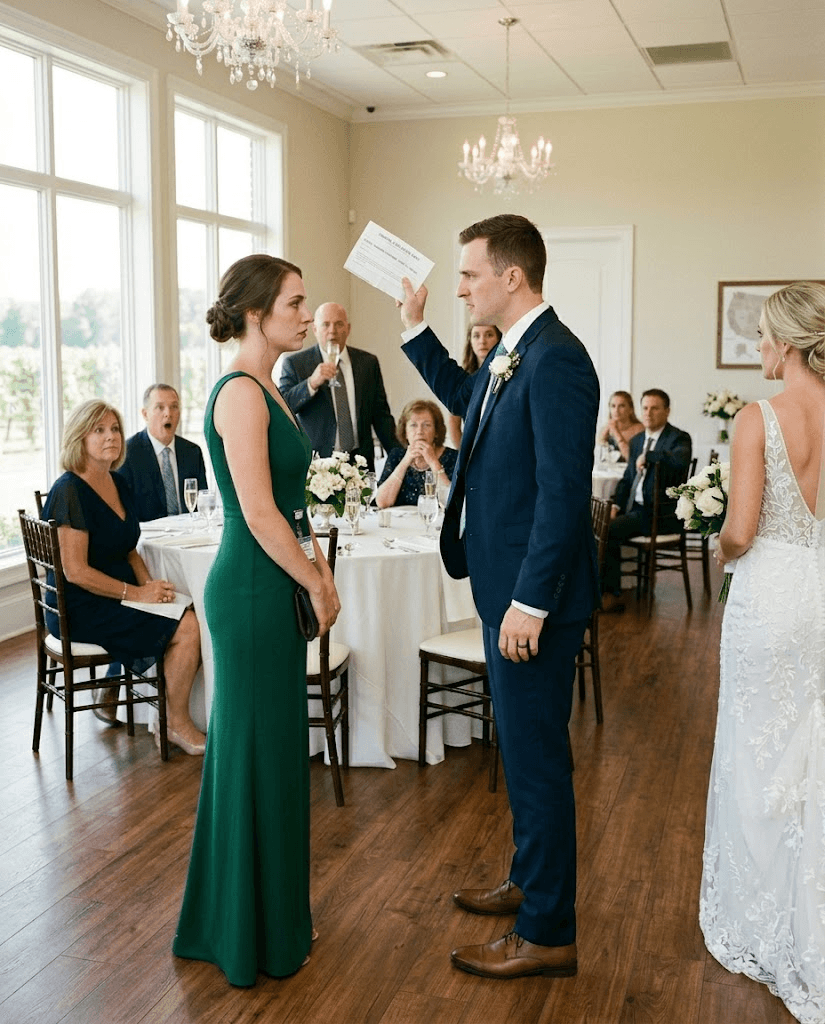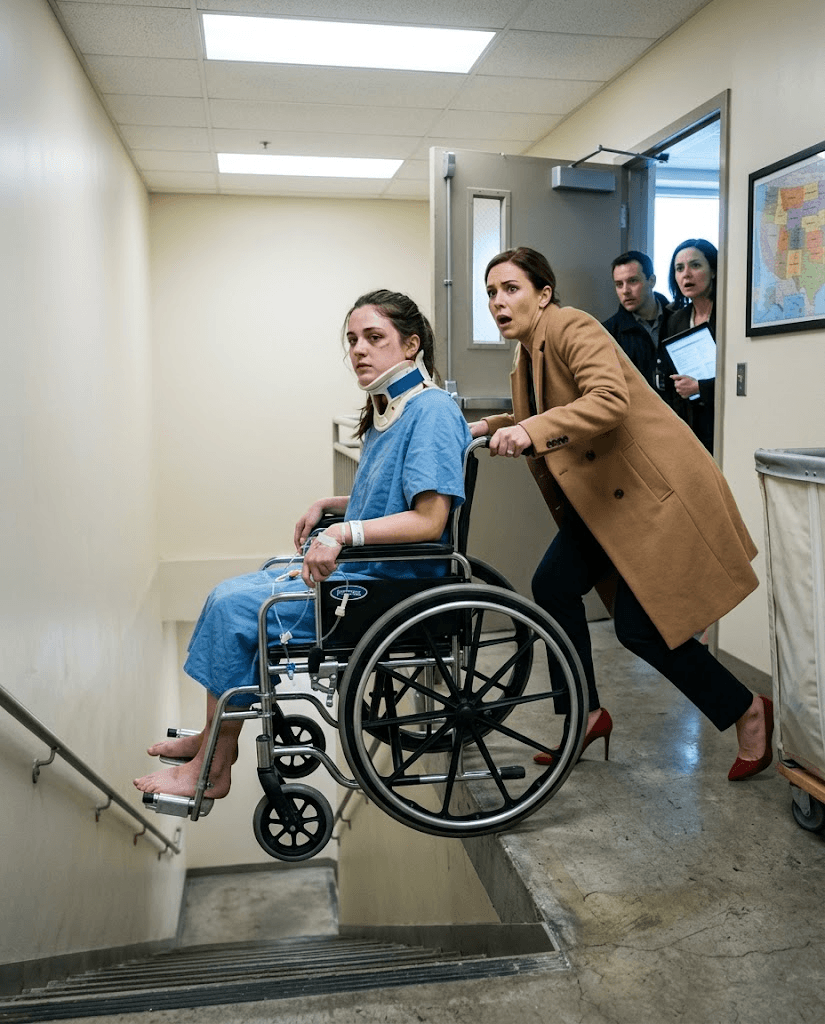

I was about to knock on my parents’ study door when I heard my mother tell my brother not to worry about the wedding debt.
She said they would make me pay.
She said I would never say no to family.
That was the sentence that stopped me in the hallway with three RSVP cards in my purse and rainwater drying on the toes of my shoes.
At first, I thought I had misunderstood.
People tell themselves that when the truth is too ugly to hold all at once.
They think maybe the door muffled it.
Maybe the words belonged to someone else.
Maybe the family that raised them could not possibly be sitting ten feet away and assigning a price to their obedience.
But my mother’s voice had always carried cleanly when she wanted it to.
Eleanor Green had a way of making every sentence sound reasonable, even the cruel ones.
My father, Richard, had the calmer version of the same gift.
He could say something selfish with the steady tone of a banker explaining interest rates, and by the end of it you would feel childish for being hurt.
I stood beside the hallway mirror in the house where I grew up, looking at my own reflection as if I had walked in on a stranger.
The foyer smelled like lemon polish and the expensive candles my mother liked to light before company came over.
The grandfather clock ticked against the wall.
Outside, Portland rain gathered itself in the gray sky, waiting.
I had come over because my mother had texted me that morning about Trevor’s wedding RSVP cards.
Please don’t make me chase you for these, she wrote at 9:14 a.m.
It was the kind of message that looked polite until you knew how to read her.
I teach third grade at a public elementary school on the east side of Portland.
My days are full of missing pencils, glue sticks without caps, kids crying because their best friend sat with someone else at lunch, and tiny hands waving worksheets at me like the fate of the world depends on a fraction problem.
It is not a glamorous job.
It is not a rich job.
But it is a life I chose because children deserve at least one room where an adult means what she says.
My parents had never understood that.
To them, teaching was what happened when ambition ran out.
Trevor was different.
Trevor was four years older, smarter in the ways my parents liked, polished in the ways they could brag about.
He worked in a world of meetings and travel and expensive shoes by the front door.
When we were kids, he saved me the last orange popsicle and taught me how to ride a bike in the empty school parking lot after I crashed into the curb twice.
That was the Trevor I remembered when I heard him say, “She’s not hinting. She’s struggling. The costs are out of control.”
For one breath, I thought he was defending me.
Then my mother answered.
“Don’t worry about the debt. We’ll make your sister pay—she’ll never say no to family.”
The words landed so cleanly that my body understood them before my heart did.
They were not asking.
They were planning.
My father laughed once.
“Exactly. She needs to learn. She chose teaching. She chose a small life. Choices have consequences.”
A small life.
I had heard versions of it for years.
When I rented instead of buying.
When I bought used furniture instead of new.
When I packed leftovers for lunch and drove the same car until the air conditioner gave out.
When my mother asked, with that soft little wince, if I was sure I wanted to spend my “best earning years” in a classroom.
My life was not small when a child finally read a full paragraph without guessing.
It was not small when a student who never spoke above a whisper began raising her hand.
It was not small when a boy who came to school hungry every Monday started keeping granola bars in my desk because he trusted I would not make a scene.
But in that house, value had always worn Trevor’s face.
I stayed still.
That was what shocked me later.
Not that they said it.
Not even that they believed it.
What shocked me was how quickly my body went back to being the daughter who knew silence kept the peace.
I could have opened the door.
I could have thrown the RSVP cards on the desk and asked whether the welcome bags needed my rent money too.
I could have told them that a wedding was not a medical emergency, a family crisis, or a moral obligation.
Instead, I listened.
Trevor said something I could not make out.
My mother replied, “Your father and I invested in the child who had a future. That was the sensible thing to do.”
There are sentences that do not break your heart dramatically.
They just confirm the fracture was there all along.
I thought of being seventeen, sitting at the kitchen table with financial aid papers spread in front of me while my father told me the college fund was “less than expected.”
I thought of my mother saying the market had been terrible.
I thought of the scholarship I chased, the campus dining shifts, the used textbooks stacked beside my bed, and the summer I sold my car because student teaching did not pay and rent still existed.
For years, I had carried that story as bad luck.
Then my father said, “She still doesn’t know what happened to her college fund.”
The study went quiet.
I went quiet with it.
That was the moment the wedding stopped being the point.
I backed away one step at a time.
The floorboards in my parents’ hallway had familiar creaks, and I knew where each one was.
I avoided them like I was sixteen again sneaking past their bedroom after curfew.
The RSVP cards shook in my hand.
I made it out the front door without anyone seeing me.
The porch swing moved in the wind.
The small American flag near the steps snapped once against its little pole.
I sat in my car at the curb and locked the doors.
For a full minute, I did nothing.
I watched rain bead on the windshield and listened to my own breathing.
Then I opened my credit union app.
My parents did not have access to my savings account, but they knew which credit union I used, which branch I visited, and which security questions I used to answer when I was younger.
That was enough to make my hands go cold.
At 3:26 p.m., I moved every dollar from the savings account they knew about into a new account they did not know existed.
I changed the password.
I changed the recovery email.
I turned on every alert.
I downloaded the transfer receipt.
I took a screenshot of my mother’s 9:14 a.m. text.
I did not do it because I felt brave.
I did it because process keeps you steady when pain wants to make you sloppy.
After that, I searched my old email.
College fund.
529.
Green education account.
Richard Green.
Most of what came up was junk, old tuition reminders and financial aid notices from years ago.
Then I found an attachment I had saved at twenty-one and forgotten.
GREEN EDUCATION ACCOUNT – AUTHORIZED WITHDRAWAL.
I stared at the file name.
My hands felt too cold to belong to me.
When I opened it, the first page showed the account type, the date, and the recipient line.
The recipient was Trevor Green.
Not me.
Trevor.
For a moment, my mind tried to protect him.
Maybe he had not known.
Maybe my parents had moved money for some temporary reason.
Maybe there was an explanation so complicated it would somehow hurt less.
But the statement showed the withdrawal amount, the processing stamp, and my father’s authorization.
It had not vanished.
It had been redirected.
The money my parents had promised me had been used somewhere else, for someone else, while I worked double shifts and listened to them praise my grit as if they had not helped create the hardship.
Then I noticed one more thing.
The document had been downloaded recently from my father’s home office printer account.
I was not supposed to know enough to look.
That was their mistake.
The front door opened behind me.
I looked into the rearview mirror and saw Trevor step onto the porch.
Rain speckled his navy jacket.
His phone was in his hand.
My mother came out right after him and grabbed his arm.
Even through the glass, I saw the sharp movement of her fingers.
He pulled away.
That was new.
For all Trevor’s kindness, he had always let our parents steer the weather in that house.
He walked toward my car slowly, like the driveway had gotten longer.
I lowered my window just enough for the cold air and his face to reach me.
He looked at my phone.
He saw the document.
For a second, he did not understand.
Then he did.
“Melissa,” he said, and his voice was smaller than I had heard it in years. “I thought Dad paid that back.”
That sentence did something to my mother’s face.
It turned her fear into anger.
My father came out behind her holding an old manila folder.
“Nobody is going to overreact until we explain,” he said.
I looked at the folder.
Then I looked at him.
“You mean until you choose which version I’m allowed to hear?”
He stopped on the bottom porch step.
Trevor turned toward him.
“What does she have?” he asked.
My father’s jaw tightened.
My mother said, “This is not a conversation for the driveway.”
That was exactly where she was wrong.
For years, every important conversation had happened in rooms where they controlled the temperature, the seating, the timing, and the exits.
This time, I stayed in my car with the window halfway down and the engine off.
Rain kept ticking against the roof.
Trevor took one step away from my parents and closer to me.
“Dad,” he said, “tell her.”
My father’s eyes flicked to him.
That was enough.
Whatever Trevor knew, he did not know all of it.
I opened the PDF again and turned the screen toward him.
“The account was for me,” I said. “It was withdrawn when I was in college. It went to you.”
Trevor stared at the screen.
His face drained so quickly I almost forgot to be angry at him.
“I asked for a loan,” he said. “I was twenty-five. I was trying to cover the gap on the business program and the apartment deposit. Dad told me he was moving money from his own investment account.”
My mother made a sharp sound.
“Trevor.”
He looked at her as if her voice had finally become visible.
“You told me she had already gotten scholarships,” he said. “You told me there was extra.”
My father’s expression hardened into the one he used when a bank teller moved too slowly or a waiter forgot his drink.
“We made a decision for the family,” he said.
“No,” I said. “You made a decision about my future and called it family.”
Nobody answered.
The neighborhood was quiet except for the rain and a dog barking somewhere down the block.
My mother folded her arms.
“You became a teacher anyway,” she said. “So let’s not pretend your life was ruined.”
That was the sentence that finally did it.
Not my father’s account.
Not Trevor’s shock.
Not the document.
That one sentence.
I had spent years building a life from the pieces they left me, and she was using the fact that I survived as proof that what they did had not mattered.
“You’re right,” I said. “My life wasn’t ruined.”
Her shoulders relaxed a fraction.
I watched it happen.
Then I finished.
“But it is no longer available.”
Trevor lowered his head.
My father said my name in warning.
I opened my banking app, showed the transfer confirmation, and let him see only what he needed to see.
The old account was empty.
The money was gone from their map.
“I’m not paying one dollar toward the wedding debt,” I said. “I’m not covering flights. I’m not covering welcome bags. I’m not putting your choices on my credit card. And I’m not handing you another private conversation you can twist into obligation.”
My mother’s mouth opened.
I kept going.
“I’m also not coming inside.”
That was the first decision I made out loud.
It felt strange.
It felt rude.
It felt like oxygen.
Trevor looked at me through the rain.
“I didn’t know,” he said.
I believed him about that.
Believing him did not erase the damage, but it changed where I aimed the truth.
“Then you can decide what kind of man you are now,” I told him.
He flinched.
My father stepped forward.
“Melissa, don’t poison your brother against us because you’re emotional.”
That almost made me laugh.
Emotional was what they called me when I remembered things accurately.
Trevor turned on him.
“Did you use her college money for me?”
My father said nothing.
“Did you?” Trevor asked again.
My mother looked toward the neighbors’ houses.
That was when Trevor understood.
He put one hand over his mouth and turned away.
It was not theatrical.
He did not shout.
He just folded inward a little, like a man realizing the foundation under a good memory was cracked.
The brother who saved me the last orange popsicle had not robbed me on purpose.
But he had benefited from a theft wrapped in parental confidence.
Both things could be true.
My father said, “We can discuss repayment.”
I shook my head.
“No. You can discuss accountability.”
That was not a courtroom line.
It was not a heroic line.
It was a tired woman in a wet car refusing to be managed for one more minute.
Before I drove away, Trevor came to the window again.
His eyes were red.
“I’m going to tell Sophia,” he said.
I nodded.
“You should.”
“She doesn’t know about the debt,” he admitted.
That explained the panic in the study.
It also made my mother look suddenly older.
The wedding they had been arranging like a status project was sitting on a secret bill, a stolen past, and a bride who had not been told what kind of family she was joining.
I did not stay to watch them start that conversation.
I drove home through wet streets and parked outside my apartment with the transfer receipt still open on my phone.
My hands shook so badly it took three tries to unlock the door.
Inside, my kitchen smelled faintly like coffee grounds and the tomato soup I had made the night before.
My apartment was small by my parents’ standards.
The couch was secondhand.
The dining table had a scratch down one side.
There were student drawings clipped to my fridge with magnets.
For the first time all day, I looked around and did not feel embarrassed by any of it.
This was not a small life.
This was a life no one had permission to spend.
Over the next week, I did not answer my mother’s calls.
There were twelve.
Then eighteen.
Then she switched to texts.
Some were sweet.
Some were furious.
Most were written as if the problem was my tone and not their choices.
My father sent one email with the subject line: FAMILY FINANCES.
I did not open it until after school, sitting alone in my classroom while the hallway smelled like floor cleaner and crayons.
He wrote that they had intended to “rebalance support” between their children.
He wrote that my resentment was painful to them.
He wrote that Trevor’s wedding should not become collateral damage.
He did not write the word sorry.
I printed the email.
Not because I needed paper to believe it.
Because some people only understand consequences when their own words are stapled together.
I put it in a folder with the withdrawal statement, my transfer receipt, my mother’s texts, and a note I wrote for myself so I would not forget the order of events later.
The note had only four lines.
They planned to make me pay.
They admitted they invested in Trevor.
They referenced the college fund.
They asked for calm after being caught.
On Friday evening, Trevor called.
I almost did not answer.
When I did, he sounded exhausted.
“I told Sophia,” he said.
I waited.
“She asked me if I was sure I wanted a wedding paid for with lies.”
That surprised me.
Then he said, “We’re cutting the wedding down. A lot. Her parents are furious. Mom is worse. But Sophia said she’d rather have a courthouse ceremony than start married life with hidden debt.”
I stared at the student essays on my kitchen table.
Part of me wanted to be petty.
Part of me wanted to ask whether the welcome bags had survived the moral awakening.
Instead, I said, “Good.”
Trevor breathed out.
“I’m going to pay you back.”
I closed my eyes.
“Trevor.”
“No,” he said. “I know it doesn’t fix it. I know I can’t give you back being twenty-one and scared. But I benefited from it. I can’t pretend I didn’t.”
That was the first honest sentence anyone in my family had offered me all week.
We agreed there would be no rushed payment, no dramatic check, no performance.
He would send me the documents he had, and we would talk after I had time to read them.
My parents hated that.
They hated the word documents most of all.
People who thrive on confusion always resent paper.
Two weeks later, Trevor came to my apartment with a plain folder and two coffees in a cardboard carrier.
He looked uncomfortable standing in my doorway.
Good.
Not because I wanted him humiliated.
Because comfort had always been handed to him first.
He sat at my scratched table and slid the folder toward me.
Inside were emails from my father, old bank statements, a repayment schedule Trevor had started years ago without understanding where the money had come from, and one message from my mother saying, “Melissa never needed it the way you did.”
I read that sentence twice.
Trevor did not interrupt me.
That was its own kind of apology.
When I finished, he said, “I’m sorry.”
I believed him.
Then I said, “I don’t know what we are after this.”
His eyes watered.
“Can we be something eventually?”
I looked at the folder.
Then at the brother who used to walk me home from the bus stop.
“Eventually is not today,” I said.
He nodded.
That mattered too.
My parents did not come around quickly.
I do not know if people like that ever really do.
They sent relatives to call me ungrateful.
They told my aunt I was punishing them over “old bookkeeping.”
They told a family friend that teachers had too much time to be dramatic.
Each version got smaller and uglier as it traveled.
I stopped correcting everyone.
I sent the documents to the two relatives who mattered and let the rest believe whatever made them feel useful.
I did not attend the original wedding weekend.
There was no ballroom.
No wine pairing.
No welcome bags with my credit card behind them.
Trevor and Sophia got married quietly with fewer people and a lunch afterward.
He sent one photo.
In it, he looked happy and sad at the same time.
I saved it but did not respond that day.
Some bridges are not burned in one blaze.
Some are closed until they are inspected for damage.
Months later, my mother mailed me a check.
No note.
No apology.
Just a check with the memo line blank.
I did not deposit it right away.
I set it on my kitchen table beside a stack of spelling quizzes and looked at it for three days.
Then I took a photo, deposited it through my banking app, and moved it into the account they did not know about.
That money did not buy back trust.
It did not make my student loans disappear retroactively.
It did not erase the years I thought I had failed to be practical enough when the truth was that my safety net had been cut and handed to someone else.
But it was mine.
That mattered.
I still teach third grade.
I still drive a car with a noisy air conditioner.
I still live in an apartment my mother would call small if I let her inside.
But on rainy Sundays, when the city smells like wet pavement and coffee, I sometimes remember standing in that hallway with RSVP cards bending in my hand.
I remember the clock ticking.
I remember my father saying I still did not know what happened to my college fund.
I know now.
I also know what happened after.
They expected the daughter with the small life to stay useful.
Instead, she counted the cost, moved her money, kept the proof, and finally stopped calling obedience love.
And the strangest part is that my life did not get smaller when I walked away.
It got quiet.
It got clear.
It became mine.