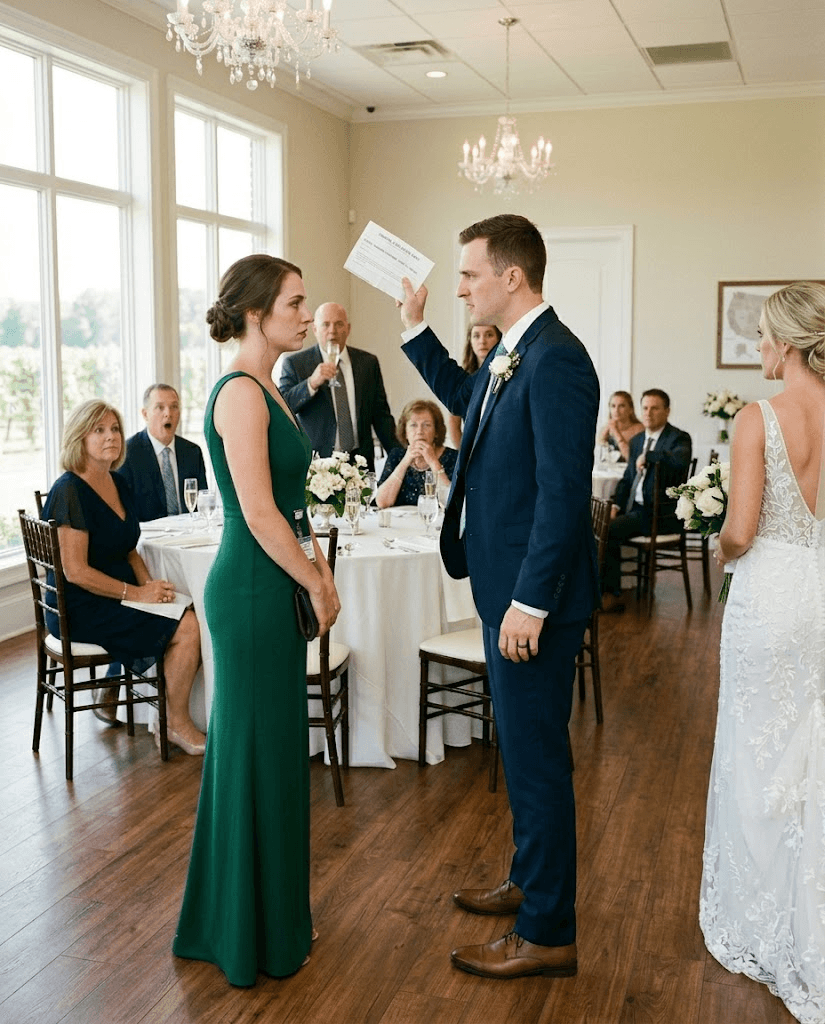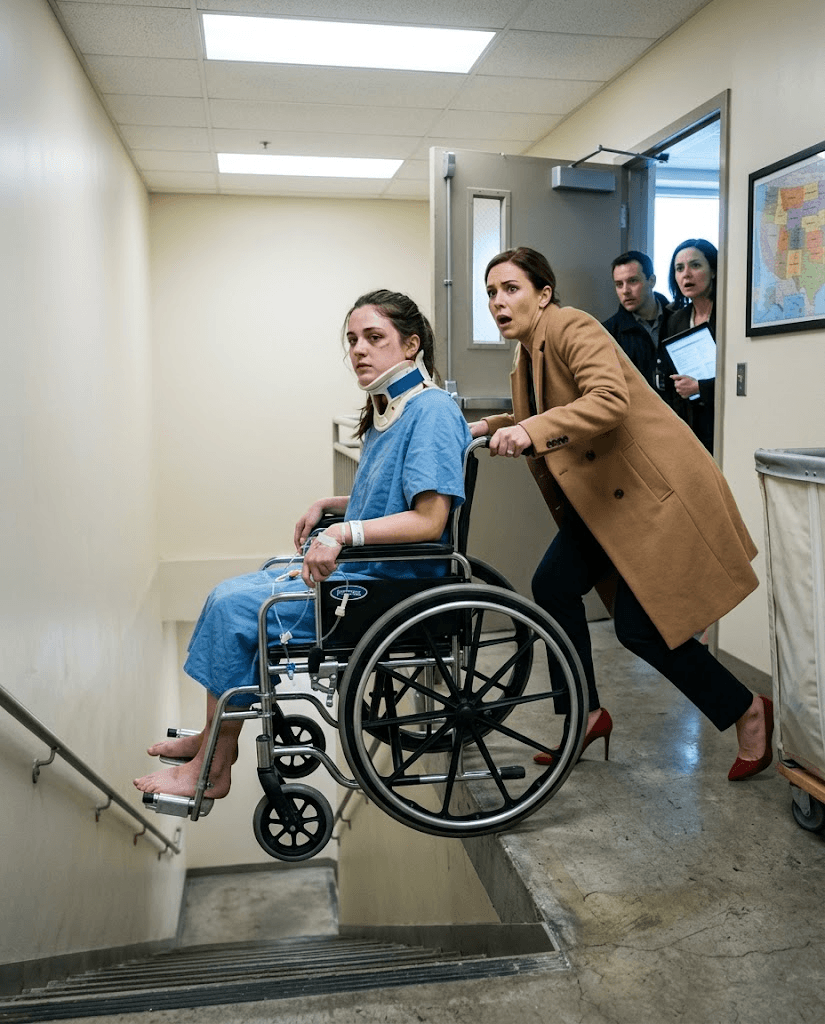

The pillow came down over my face so gently that, for half a second, my brain tried to call it care.
That is what fear does when your body cannot move.
It searches for a better explanation.
It says maybe she is adjusting the bedding.
Maybe she is fixing the light.
Maybe the woman leaning over you with perfume in her throat and hatred in her eyes is not about to finish what the balcony failed to do.
Then Vivian Hale whispered, “You should have died in the fall.”
That was when my body understood before my mind finished catching up.
I was trapped in a hospital bed, locked in a full-body cast from my chest to my ankles.
Two cracked ribs.
Three fractured vertebrae.
A spine the doctors kept describing with words like stable and cautious and miracle.
The third-floor balcony had nearly snapped me in half, and everyone around me kept using the same word.
Lucky.
My husband, Adrian, said it while crying into my hospital blanket.
The nurses said it when they checked my pupils and adjusted the pillows.
Vivian said it with one hand over her heart, standing near the door in a cream coat that looked too clean for a woman who had supposedly been terrified for her daughter-in-law.
“She is so lucky,” she told anyone who would listen.
But Vivian had never believed in my luck.
She believed in control.
For two years, she had made that clear in ways small enough for her son to ignore and sharp enough for me to bleed from.
At dinners, she asked if I needed help understanding the wine list.
At family birthdays, she introduced me as “Adrian’s wife” and left my name hanging somewhere behind her teeth.
When I brought sweet potato casserole to Thanksgiving because Adrian said it was his favorite, Vivian smiled and told the table, “Isn’t that sweet? Elena still cooks like rent is due tomorrow.”
Everyone laughed softly because people with money often confuse cruelty with charm when it is served on good china.
Adrian did not laugh.
That was worse sometimes.
He only looked down and rubbed his thumb against his wedding ring, waiting for the moment to pass.
“Mom doesn’t mean it like that,” he would tell me later in the car.
I used to ask, “Then how does she mean it?”
He never had an answer.
The truth is, I married Adrian because I thought quiet was kindness.
He was not loud like the men I had watched ruin other women’s lives in break rooms and court hallways.
He did not slam doors.
He did not call me names.
He listened when I talked about work, or at least he looked like he did.
Before the Hales, I had been Elena Cross, forensic accountant for the state attorney’s office.
My job was to sit with boxes of bank records and find the lie hiding inside ordinary numbers.
A missing receipt.
A duplicate payment.
A signature that appeared too cleanly in the wrong month.
I knew greed rarely looked wild at first.
It looked practical.
It looked worried.
It sounded like, “We should update the life insurance policy, just in case.”
Adrian started saying that three months before the balcony fall.
At first, it came up over breakfast while he poured coffee into the mug I bought him on our first anniversary.
Then it came up in the grocery store parking lot while rain dotted the windshield and he watched an older couple load paper bags into an SUV.
Then it came up at night while we stood side by side at the bathroom sink, brushing our teeth like people who were still sharing a life.
“You drive late sometimes,” he said.
“You make it sound like I work in a war zone,” I told him.
“Accidents happen, Elena.”
The way he said my name made my skin tighten.
Vivian was there the next weekend.
She brought lilies even though she knew they made my throat itch, then stood in our kitchen under the little framed map of the United States Adrian had bought for the hallway and said, “Responsible families plan for unpleasant possibilities.”
I remember wiping water off the counter and thinking that was such a strange word.
Unpleasant.
Not tragic.
Not terrifying.
Unpleasant.
Like my death would be a stain on linen.
Still, I signed the policy update after Adrian promised it was only adult housekeeping.
That is how betrayal often begins.
Not with a shove.
With paperwork.
A signature.
A person you love saying you are difficult if you ask one more question.
The confirmation email arrived at 8:12 a.m. the day before I fell.
I noticed the time because I notice times for a living.
Adrian did not think I saw it.
He was already in the kitchen, phone facedown beside his plate, pretending to read the news.
That night, the rain started just after ten.
It tapped on the balcony doors with a dry, nervous sound.
I had found the insurance email again, along with a missed call from the policy office at 9:38 p.m.
That call had gone to Adrian, not me.
When I asked him why, his face changed before his voice did.
“Can we not do this right now?”
“Do what?”
“Turn everything into an interrogation.”
Vivian’s voice came from the hallway behind me.
“Elena, stop making this ugly.”
She had let herself in with the key Adrian gave her “for emergencies.”
That was the trust signal I ignored.
The key.
The alarm code.
The way Adrian let his mother enter our house like I was the guest.
I stood by the balcony doors, barefoot, wearing one of Adrian’s old T-shirts and sweatpants, my hair still damp from the shower.
The hallway light threw Vivian’s shadow long across the floor.
Adrian moved toward me.
I remember his hand closing around my wrist.
Not hard enough to bruise.
Hard enough to hold.
I remember saying, “Let go.”
I remember the railing behind me making a thin metallic cry.
Then the world tilted.
For one terrible second, I saw Vivian’s face over Adrian’s shoulder.
She did not look shocked.
She looked ready.
The porch light flipped sideways.
The wet driveway rushed up at me.
Then there was only impact, silence, and a darkness so complete it felt like being erased.
When I woke up, my mouth tasted like plastic and blood.
A nurse was saying my name.
A monitor beeped steadily beside me.
Adrian was holding my hand.
His face was ruined in all the right places for a grieving husband.
Red eyes.
Unshaven jaw.
Shaking mouth.
Vivian stood behind him, one hand on his shoulder, the other clutching a tissue.
“My poor daughter-in-law,” she whispered to the nurse.
Daughter-in-law.
Not Elena.
I could not speak well at first.
The pain was too wide.
It filled every room inside my body.
The doctors told me what had broken.
They told me what had not.
They told me there were surgeries I had avoided by inches and paralysis I had escaped by a margin nobody wanted to say out loud.
Adrian cried harder every time a doctor used the word miracle.
Vivian cried when nurses were watching.
But I had spent too many years watching criminals perform innocence to miss the rhythm.
People who are truly devastated forget their audience.
Vivian never did.
She knew when to lower her voice.
She knew when to dab at her eyes.
She knew when to call Adrian “my poor boy” just loudly enough for staff to hear.
The first thing that felt wrong was the intake form.
I saw it on a clipboard near the foot of my bed the second afternoon, half-covered by a discharge planning sheet.
Cause of injury: accidental fall.
I had not been awake when someone wrote that.
The second thing was the balcony inspection note Adrian kept in his folder.
He said the building contractor had checked it.
There was no company name.
No phone number.
No license number.
Just a typed sentence saying the railing had loosened from weather exposure.
The third thing was Vivian.
Every time a nurse or doctor called the railing broken, Vivian corrected them.
“Loose,” she said.
Once might have been nothing.
Twice was a pattern.
By day three, I stopped asking questions out loud.
I watched.
I listened.
I let Adrian kiss my forehead and Vivian smooth my blanket.
I let them believe the cast had turned me into a woman who could only suffer.
On the fourth morning, a nurse with tired eyes came in before shift change.
She had coffee on the pocket of her scrubs and the careful face of someone who had made a decision before entering the room.
She checked my IV.
She adjusted the blanket.
Then she leaned close enough that her hair brushed my pillow.
“Do you feel safe when they visit?”
My throat tightened.
I could not turn my head, so I looked at her hand.
She slipped a small black button beneath my palm.
“Keep your thumb on this,” she whispered.
I did not ask what it was.
A younger version of me might have.
The woman in that bed already knew.
By then, someone had called the three private investigators I had hired through an attorney I trusted from my old office days.
They did not need my body to move.
They needed time.
For forty-eight hours, they watched.
They checked visitor logs.
They spoke to hospital security.
They photographed the hallway.
They matched the policy call times to Adrian’s phone records and pulled the permit history for the balcony repair Adrian claimed had happened.
They found no repair.
They found a neighbor across the street with a camera pointed toward our house.
They found a timestamped blur of a hand on my wrist and Vivian standing behind me at 11:48 p.m.
Not enough by itself.
Never enough by itself.
That is the cruel part about truth.
It can be obvious and still need evidence.
Vivian came that afternoon alone.
Adrian said he had to take a call from the insurance office, which was the first honest thing he had done in days, even if he did not know it.
Vivian brought flowers.
White roses.
She set them on the counter without water and looked down at me with the soft public face she used around staff.
“My poor Elena,” she said.
The nurse left the door slightly open.
Vivian waited until her footsteps faded.
Then her face changed.
It was not dramatic.
It was more frightening than that.
The softness simply drained away.
“Do you know what you have done to my son?” she asked.
My lips were cracked.
My voice came out thin.
“I fell.”
Her mouth curved.
“You were supposed to.”
The room became very quiet.
The monitor kept beeping.
Somewhere in the hall, a cart wheel squeaked.
Vivian moved closer and pinched my bruised cheek between two fingers.
Pain shot white through my skull.
“Cheap trash,” she whispered.
There are insults that hurt because you believe them.
There are insults that clarify everything because you finally do not.
I looked at her.
I did not blink.
That made her angry.
She reached for the pillow beside my head.
Even then, she was careful.
Careful women are the most terrifying kind when they decide to be cruel.
She lifted it slowly, like she was adjusting me for comfort.
Then she pressed it over my face.
The cotton smelled like bleach and plastic.
Her perfume cut through it, floral and expensive.
My lungs pulled once and got almost nothing.
“You should have died in the fall,” Vivian whispered.
Her bracelet scraped my cheek.
“But I’ll finish the job so my son can be free.”
I counted.
One.
Two.
Three.
Counting gave me somewhere to put the fear.
Four.
Five.
Six.
The monitor beside me quickened.
Vivian pressed harder.
Seven.
Eight.
Nine.
At ten, my thumb found the button.
Click.
It was so small.
A tiny sound under the pillow.
Vivian heard it.
Her hands paused.
The door burst open so hard it hit the wall.
“Step away from the bed, Mrs. Hale.”
The pillow lifted.
Air came back like fire.
I coughed once and could not curl into it because the cast held me flat.
The lead investigator was already at the side of the bed.
Another one moved between Vivian and the door.
The third stood behind him with a phone in his hand.
My nurse appeared in the doorway, saw the pillow, and covered her mouth.
Vivian laughed.
It was the wrong laugh.
Too high.
Too clean.
“She was panicking,” she said. “I was helping her breathe.”
The investigator did not look at me first.
He looked at the pillow in her hand.
Then he looked at the monitor, still racing.
Then he looked at Vivian’s bracelet, which had caught one loose fiber from the pillowcase.
“Put it down,” he said.
Vivian did.
For the first time since I had known her, she obeyed without being flattered into it.
The investigator set a tablet on my blanket and pressed play.
The first sound was rain.
Then Adrian’s voice.
“Mom, stop. This is getting out of control.”
Vivian’s voice answered, low and sharp.
“It is only out of control because you married a woman who asks questions.”
The recording crackled.
I heard myself from the night of the fall, faint and angry.
“Let go of my wrist.”
Then metal screamed.
The room seemed to shrink around Vivian.
She reached for the bed rail, missed, and grabbed the edge of her coat instead.
“That proves nothing,” she whispered.
“No,” the investigator said. “But the rest helps.”
He listed it without drama.
The life insurance increase.
The call Adrian placed before 911.
The missing balcony bolts.
The fake inspection note.
The neighbor’s camera.
The hallway recording from the last forty-eight hours.
The attempt with the pillow.
Each item landed harder because he did not raise his voice.
People like Vivian expect outrage.
They know how to perform against outrage.
Facts are colder.
They give you nothing to charm.
Adrian arrived seven minutes later.
I know because I was staring at the clock above the door, trying not to shake.
He came in breathless, with his hair pushed back and his face arranged for panic.
Then he saw the investigators.
He saw his mother.
He saw the tablet on my blanket.
The husband face disappeared.
“Mom?” he said.
It was not concern.
It was warning.
Vivian turned toward him so fast her bracelet flashed.
“Do not say anything,” she snapped.
That was when I understood their marriage of convenience was not theirs to control anymore.
Not my marriage to Adrian.
His marriage to his mother.
A detective arrived with hospital security minutes later.
Vivian tried to become fragile.
She touched her throat.
She said she needed water.
She said this was a misunderstanding.
She said I had always been unstable after the fall.
The nurse, the same one who had put the button in my hand, stepped forward with tears standing in her eyes and said, “I saw the pillow.”
That broke something in the room.
Not in Vivian.
In Adrian.
He looked at the nurse like she had betrayed him personally, which told me all I needed to know about the world he thought he owned.
He did not ask if I could breathe.
He did not ask what his mother had done.
He asked, “Who called them?”
I would have laughed if it had not hurt.
“I did,” I rasped.
His eyes snapped to mine.
For the first time in our marriage, he looked truly afraid of me.
Not because I was cruel.
Because I was no longer useful.
The officers took Vivian out first.
She did not scream.
She did something worse.
She stared at me as they led her through the doorway, her mouth pressed into a thin line, as if she were memorizing me for later.
Adrian stayed behind because he thought there was still a version of the story where he could be the stunned husband.
He sat in the chair beside my bed.
He reached for my hand.
The investigator stopped him with one word.
“No.”
Adrian’s face hardened.
It was only a second, but I saw it.
The softness was a costume.
I had been sleeping beside a man who wore it well.
The next weeks did not move like television.
There was no instant justice.
There were statements, reports, follow-up interviews, medical evaluations, and lawyers who spoke in careful phrases.
The hospital documented the smothering attempt.
The police documented the injuries and the prior fall.
The insurance company froze the claim before Adrian could touch a dollar.
The neighbor’s camera footage was enhanced enough to show the timing, the positions, and Adrian’s hand on my wrist.
The fake balcony inspection note led back to Adrian’s printer.
The missing bolts were found in a garage storage bin beneath a coil of extension cord and two cans of paint.
That detail stayed with me.
Not because it was clever.
Because it was ordinary.
My almost-murder had been stored beside weekend chores.
Vivian’s attorney tried to argue panic.
Adrian’s attorney tried to argue grief.
Mine did not argue much at all.
She laid out the timeline.
8:12 a.m., policy confirmation.
9:38 p.m., policy office callback.
11:48 p.m., balcony fall.
Before 911, Adrian called the policy office again.
Forty-eight hours of hospital monitoring.
Then the pillow.
It is hard to make grief sound innocent when it keeps arriving before the emergency.
The first time I testified from a wheelchair, I wore a plain blue sweater because I wanted to feel like myself and not like an exhibit.
Vivian would not look at me.
Adrian did.
He looked sad.
That used to work on me.
It did not anymore.
The prosecutor played the hospital recording for the judge during the preliminary hearing.
Vivian’s voice filled the room.
“You should have died in the fall.”
Nobody moved.
A woman in the back row covered her mouth.
Adrian closed his eyes.
I sat very still, my hands folded over the blanket in my lap, and listened to the moment I almost lost my life become evidence.
There is a strange mercy in that.
Pain becomes a thing outside your body.
A file.
A recording.
A date.
A fact nobody gets to soften for dinner-table comfort.
Vivian took a deal before trial.
Adrian held out longer.
He still believed, somehow, that if he looked wounded enough, people would forget the call logs and the bolts and the policy timing.
They did not.
By then, I had moved from the hospital to a rehab facility and then to a small apartment with a ground-floor entrance and a porch light I could see from bed.
A friend from my old office brought groceries every Thursday.
The nurse sent one card with no return address.
It said, simply, “I am glad you pushed the button.”
I kept it in the top drawer beside my medications.
Recovery was not beautiful.
It was humiliating and slow.
It was learning to stand with two people holding me under the arms.
It was crying because a shower chair made me feel eighty years old.
It was signing divorce papers with a hand that still trembled when I got tired.
It was watching my maiden name return to me on legal documents and feeling something in my chest loosen.
Elena Cross.
Not Mrs. Hale.
Not charity.
Not trash.
Mine.
The day Adrian’s plea was entered, I did not go to the courthouse.
I sat at my small kitchen table with a paper coffee cup, a stack of medical bills, and sunlight falling across the floor.
My attorney called after noon.
“It’s done,” she said.
I thanked her.
Then I hung up and sat in the quiet.
For a long time, I thought surviving meant the world would feel loud afterward.
It did not.
It felt ordinary.
A refrigerator humming.
A neighbor’s dog barking.
A mail truck stopping at the curb.
My own breath moving in and out without anyone’s hand over it.
Months later, I visited the hospital for a follow-up.
I walked in with a cane.
Slowly.
Unevenly.
But on my own feet.
Near the hallway, I saw a framed map of the United States on the wall, the kind nobody really notices unless they are looking for proof that they are still here, still placed somewhere in the world.
I stopped under it for a moment.
A nurse I did not know asked if I needed help.
I said no.
Then I kept walking.
People still tell me I was lucky.
Maybe I was.
Lucky the fall did not kill me.
Lucky the nurse listened to the wrong tone in Vivian’s voice.
Lucky the investigators were already watching.
But luck was not the whole story.
The truth was I had spent years being underestimated by people who mistook silence for weakness.
They thought a cast made me helpless.
They thought marriage made me loyal past reason.
They thought money could turn murder into an accident if the paperwork was neat enough.
They forgot one thing.
Before I was Adrian’s wife, before I was Vivian’s disappointment, before I was the woman in that hospital bed counting seconds under a pillow, I was the person who knew how to find the lie.
And in the end, that was what saved me.
Not rage.
Not revenge.
The truth.
Documented.
Timestamped.
Breathing.