
The first sound I remember after my children were born was not crying.
It was the heart monitor beside my bed, making its steady little beep in a room that had gone too quiet.
The second sound was the squeak of a cart somewhere in the hospital hallway, rolling over polished tile while five newborns slept beneath warm lights in clear plastic bassinets.
The room smelled like antiseptic, powder, and heated blankets.
My throat tasted like metal from the anesthesia, and every breath pulled against the stitches across my abdomen.
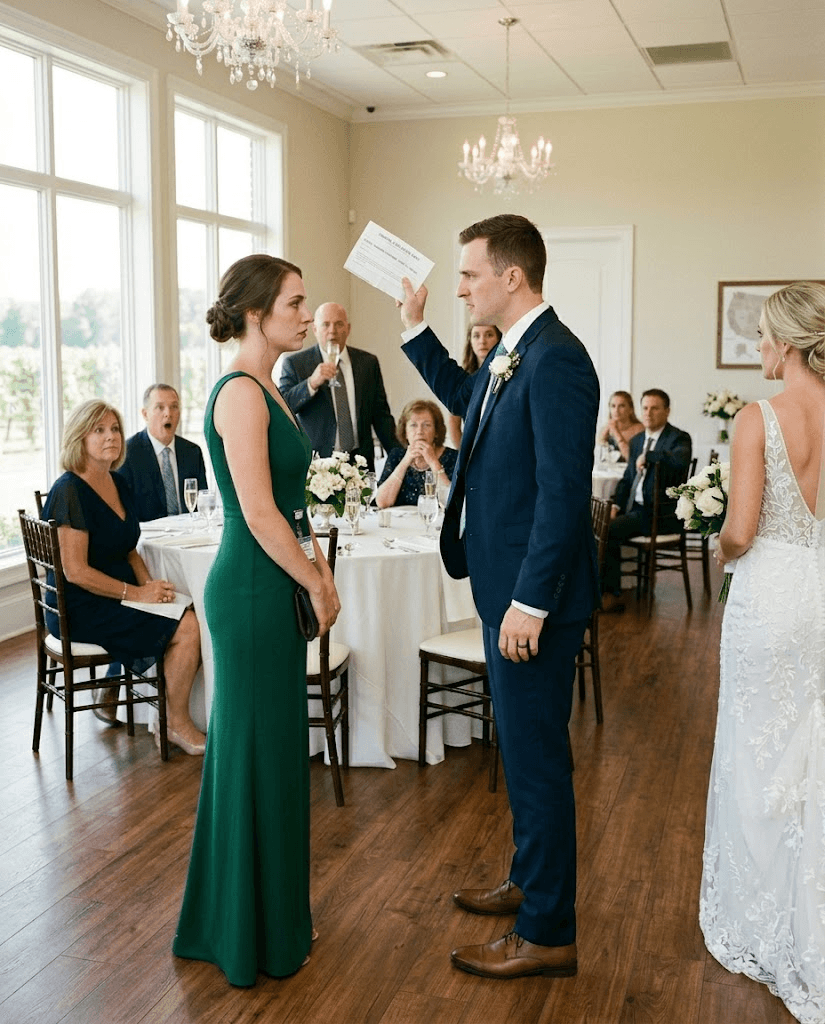
I was still trying to lift my head when my husband, Benjamin Whitmore, stepped backward from the babies as if the air around them had changed.
He looked at all five of them.
Then he looked at me.
All five babies were Black.
Benjamin’s face did not fill with wonder, fear, panic, or even confusion.
It filled with certainty.
“They’re not my children,” he said.
The words hit the room harder than a slap.
A nurse near the door froze with a chart in her hand.
The pediatric resident stopped writing.
Another nurse reached for the privacy curtain and pulled it halfway across, but the metal rings scraped along the track so loudly that every person in that room heard the shame being dragged around my hospital bed.
“Benjamin,” I whispered.
My voice barely came out.
I had carried five babies, survived a delivery that left my whole body shaking, and somehow I was still expected to defend myself before I had even held them all.
“Please,” I said.
He looked at the bassinets again, then turned his face away.
Behind him stood his mother, Victoria Whitmore, in a cream coat and pearls, her perfume sharp enough to cut through the disinfectant.
Victoria had always known how to make cruelty look like manners.
She stepped closer to the babies, inspected them as if they were a problem on a bill, then looked at me with a verdict already formed.
“This family will not raise another man’s children,” she said.
“They are yours,” I whispered.
My lips were dry.
“They’re your grandchildren.”
Benjamin laughed once under his breath.
It was not loud.
That made it worse.
A loud laugh might have been anger.
This was belief.
“The doctors can run whatever tests they want,” he snapped. “I know what I’m looking at.”
He did not know what he was looking at.
That was the tragedy, and eventually, it became the punishment.
Months earlier, after an ultrasound changed one baby into two, then three, then five, specialists had begun speaking to us in careful voices.
They asked questions about family history.
They drew blood.
They explained rare inheritance patterns, recessive traits, old lines that could sleep silently for generations before appearing in a child.
I listened.
I asked for copies.
I took notes the way I had been trained to do before I ever married Benjamin.
I had been a contract attorney in Chicago, and I had learned early that people show you who they are by what they ignore.
My grandmother had kept family records in a blue tin box under her bed.
There were photographs, letters, and names that had survived moves, arguments, funerals, and people who preferred not to talk about the past.
I brought those papers to Benjamin one night at our kitchen table.
He glanced at them for less than a minute.
Then he pushed the box back toward me.
“Old family stories,” he said.
I told him the doctors did not think they were meaningless.
He said doctors liked making things complicated.
That was the first time I felt a small coldness open between us.
I told myself fear did that to people.
I told myself marriage meant giving the frightened version of someone a little grace.
A woman can mistake dismissal for stress when she needs a marriage to survive.
By the time the babies came, I thought the notes, the appointments, and the medical file had made the truth solid enough to stand on.
Benjamin proved me wrong before the nurses had even finished checking the bassinets.
At 4:12 p.m., a nurse clipped five hospital ID bands beside them.
At 4:19, a physician signed the neonatal documentation packet.
At 4:27, the first DNA collection form went into the file because a quintuple birth required extensive medical verification.
Benjamin did not ask one question about the forms.
He did not ask whether the babies were breathing well.
He did not ask if I was all right.
He reached down, tore off his hospital visitor bracelet, and threw it into the trash.
“I’m done,” he said.
A tiny fist opened in the bassinet closest to me.
I remember that more clearly than his face.
Then Benjamin walked out.
He did not touch one baby.
He did not kiss my forehead.
He did not look back through the glass.
Victoria remained just long enough to bend near my ear.
“You’ll sign the divorce papers quietly,” she murmured. “No interviews. No claims. No scandal.”
I stared at the bassinets because if I looked at her, I was afraid I would use the last of my strength on rage.
“We’ll say the stress of childbirth affected your judgment,” she added.
The room was still full of people, but nobody spoke.
A young nurse’s eyes filled, and she looked down at the chart like the paper might give her somewhere to put her anger.
Victoria straightened her coat.
“You should thank us for leaving quietly.”
The door clicked shut behind her.
For a few seconds, the hospital room belonged only to me, the nurses, and five children who had done nothing except arrive.
I reached into the nearest bassinet and touched my daughter’s hand.
Her fingers curled around mine with impossible strength.
I named her Simone two days later.
Her brothers and sisters came home with names, bracelets, discharge papers, formula samples, and a mother who had stopped waiting for anyone else to choose us.
For the first two years, the Whitmore family pretended we had vanished.
Benjamin’s attorneys sent letters with expensive letterhead and ugly little phrases.
Cease and desist.
Defamation exposure.
Reputational damage.
Improper use of the Whitmore name.
They offered money, too, always through someone else, always quietly, always in a way that made disappearance sound like a favor.
Victoria controlled the public story.
At charity luncheons and polished events, she referred to a painful family matter.
She said Benjamin had survived an intimate betrayal.
She said the family was healing.
She never used my name.
That was on purpose.
If she named me, people might picture a woman in a townhouse with five car seats, cracked hands from washing bottles, and a legal pad on the kitchen table.
If she named my children, people might picture babies.
Cruel families love vague language because it lets them destroy you without leaving fingerprints.
Eighteen months later, Benjamin remarried a woman named Claire Holloway.
I saw the wedding announcement while standing in line at a grocery store with two babies in a double stroller, one strapped to my chest, and two more at home with a neighbor I paid in casseroles and legal help.
Claire was blonde, wealthy, and camera-ready.
She looked like the kind of woman Victoria had always imagined standing beside her son in photographs.
At the reception, a reporter asked Benjamin if he wanted children someday.
He smiled.
“Real ones,” he said.
I watched the clip later at 3:08 a.m. on a phone with a cracked corner while feeding one son and rocking one daughter with my foot.
Simone slept against my shoulder, milk-drunk and warm.
That was the night I stopped crying for him.
Not for myself.
Not for the marriage.
Not for the girl I had been when I believed a family name meant safety.
I stopped because there were five children in my house, and grief, if I let it, would take up the space they needed for breakfast, homework, clean socks, and birthday candles.
So I saved everything.
Every article.
Every interview.
Every voicemail.
Every legal threat.
Every certified mail receipt.
Every support filing.
Every unopened response.
The DNA report arrived through the proper channels, just as the hospital said it would.
It confirmed what I already knew.
Benjamin Whitmore was the biological father of all five children.
The report was sent to his attorney.
It was sent to my attorney.
It was logged.
It was copied.
It was placed in a folder I kept in a locked file cabinet beside tax returns, birth certificates, and one photograph of the five babies lined up in their bassinets.
Benjamin never came for it.
He never paid child support.
Not once.
There were months when I paid the gas bill late and told the children we were having breakfast for dinner because pancakes were fun, not because pancake mix was cheap.
There were nights when I ironed the same blouse for court three times because I could not afford a new one.
There were mornings when I dropped the kids at school, drove to a client meeting, argued contract language across a polished table, and came home to a kitchen floor sticky with apple juice.
Still, the house was ours.
The townhouse was small, but it had rules.
We told the truth.
We did not make shame a family tradition.
We did not let bitterness sit at the dinner table and pretend it was a sixth child.
Simone became the child who asked questions first.
Her brothers learned early how to carry grocery bags, fold laundry, and stand beside their sisters without being told.
My youngest daughter saved every birthday card Benjamin never sent.
She kept them as empty envelopes in a shoebox, not because she missed him, but because she wanted proof that absence could be measured.
When the children were ten, Victoria came to the house.
It was a rainy Thursday.
A black sedan pulled up outside, shining against the curb like it had never touched a pothole.
Victoria stepped out with a leather briefcase and a face that had not softened with time.
I let her in because my children were upstairs, because I wanted witnesses only when witnesses were necessary, and because I had learned that powerful people make more mistakes when they think you are afraid.
She sat at my kitchen table.
I poured tea.
She opened the briefcase and slid a document toward me.
“Three million dollars,” she said.
I looked at the number.
“You and the children disappear permanently,” she continued. “No lawsuits. No inheritance claims. No future contact.”
From the hallway, I saw the shadow of Simone’s feet near the stairs.
She was listening.
Victoria saw me notice and lowered her voice.
“You’re a practical woman,” she said.
I was.
That was why I said no.
Victoria blinked.
For the first time since I had known her, uncertainty crossed her face.
“You think those children belong in our family?” she asked.
I looked toward the ceiling, where a burst of laughter came from one of the bedrooms.
A toy hit the floor.
Someone shushed someone else.
“No,” I said softly. “I think your family never deserved them.”
She left without finishing her tea.
After that, the years came the way years do when you are raising children alone.
Fast in memory.
Slow in the middle of a Tuesday night fever.
There were science fairs, braces, school forms, grocery runs, one broken wrist, two prom dresses, college applications, part-time jobs, and hundreds of dinners where the children tried to leave the last piece of chicken for me.
They grew into people I admired.
Not perfect people.
Real people.
Simone became organized in a way that made other people stand straighter around her.
One of my sons fixed things before anyone asked.
My other son learned to make everyone laugh exactly when the room needed air.
My daughters became women who could spot a lie before it finished introducing itself.
They knew who Benjamin was.
I never gave them a fairy tale, and I never fed them poison.
I showed them documents when they were old enough.
I answered questions.
I told them the truth without making them carry my anger.
That was harder than people think.
The day Benjamin returned, the sky over Chicago was gray and low.
My office receptionist called upstairs and said a man named Benjamin Whitmore was in the lobby.
For a moment, I looked at the phone like it had spoken in a dead man’s voice.
I had not seen him in thirty years.
My children were already with me that afternoon because we had gathered to sign the final documents for the family trust I had built in their names.
It had taken decades.
It had taken fees, filings, careful investments, late nights, and the kind of stubbornness people call pride when they cannot understand survival.
Five grown adults sat around my conference table.
Five lives he had denied.
Five people who had learned how to stand without him.
“Do you want him sent away?” Simone asked.
She did not sound afraid.
That nearly broke me.
“No,” I said.
Then I opened the file cabinet.
The original hospital folder was still there.
So were the DNA report, the support filings, the attorney letters, the certified mail records, and every piece of paper the Whitmores had once assumed I would be too exhausted, too ashamed, or too poor to keep.
When Benjamin entered the conference room, he looked older than I expected and smaller than I remembered.
Time had loosened his face.
His suit was still expensive, but it could not make him powerful in a room where nobody needed anything from him.
He looked at me first.
Then he saw Simone standing at the head of the table.
His eyes moved across the others.
One daughter.
Two sons.
Two daughters.
Five faces.
His face drained before anyone said a word.
There are moments when truth does not need an entrance.
It is already sitting in the room.
He said my name.
In his mouth, it sounded borrowed.
I did not answer.
I slid the first certified report across the polished wood.
His eyes dropped to it.
At the top was the case information.
Below it was the language he had spent thirty years avoiding.
Biological father probability: 99.9998%.
Benjamin stared at the page.
He did not touch it at first.
His right hand hovered above it, trembling slightly, as if the paper might burn him.
Simone spoke before I did.
“You had this,” she said.
Her voice was calm, and that calmness did more damage than shouting ever could.
“It was mailed to your attorney. It was filed. It was available before we were old enough to roll over.”
Benjamin swallowed.
“I didn’t know.”
My oldest son gave one humorless laugh.
“You didn’t want to know.”
My youngest daughter opened another folder and placed the support filings beside the report.
Court-stamped notices.
Returned envelopes.
Documentation of nonpayment.
A history of silence made visible.
Benjamin looked from the papers to the children, and for the first time, I saw him understand that absence was not empty.
Absence had weight.
Absence had dates, signatures, receipts, and children who grew up learning not to wait by windows.
He reached for the back of a chair.
His hand missed the first time.
Nobody moved to help him.
That was not cruelty.
It was balance.
Thirty years earlier, I had been in a hospital bed, cut open, drugged, and humiliated while he walked away from five newborns.
Now he was simply standing in a conference room with the truth.
He managed to sit.
“I was told,” he began.
Simone lifted her hand.
“No.”
One word.
The room stopped with it.
“You don’t get to put this on your mother before you answer for yourself,” she said.
Benjamin’s mouth tightened.
For a flash, I saw the younger man from the hospital, the one who believed certainty made him right.
Then the flash passed.
He looked tired.
He looked cornered.
He looked like a man realizing that the performance had ended and the audience had kept the receipts.
“I thought,” he said.
My other son leaned forward.
“You thought looking at us was enough evidence to throw us away.”
Benjamin flinched.
Good.
Not because I wanted pain for its own sake, but because some truths deserve to land.
I opened the last envelope.
It was not from the hospital.
It was not from a court.
It was from the family trust.
I had named each of my children.
I had protected what I built.
I had also included a clause drafted in language so clean that no Whitmore attorney could twist it into something else.
Benjamin had come, I later learned, because Victoria had died and the old family estate had become a battlefield.
There were questions about heirs.
There were questions about bloodline.
There were questions about whether the five children he had denied could make claims he had spent decades pretending did not exist.
He had not come looking for forgiveness.
He had come looking for control.
That was his final mistake.
I slid the trust document to Simone, and she slid it to him.
“You don’t have to worry,” she said. “We are not here to beg for your name.”
Benjamin looked up.
His eyes were wet now, but tears did not change the math of a life.
“We already had a family,” she continued. “She built it.”
For the first time all afternoon, my children turned toward me.
I had been strong for so long that being seen almost hurt.
Benjamin looked at them, then at the documents, then at me.
“I made a mistake,” he whispered.
Thirty years earlier, I might have wanted that sentence more than air.
Now it sounded too small for the room.
“No,” I said. “A mistake is forgetting a birthday. A mistake is missing a turn. You made a decision, Benjamin.”
He lowered his head.
“And you kept making it,” I said. “Every day you did not call. Every month you did not pay. Every year you let strangers hear your version while your children grew up carrying your silence.”
Nobody spoke.
Outside the glass wall, office life continued in muted movement.
Phones rang.
A copier warmed up.
Rain streaked the window.
Inside the room, Benjamin Whitmore finally had nothing left to perform.
He asked if he could speak to them privately.
Simone looked at her brothers and sisters.
They did not need words.
“No,” she said.
It was not angry.
It was clean.
He nodded as if he had expected it and still hoped for something else.
Then my youngest daughter reached into her bag and pulled out a small shoebox.
For a second, I did not recognize it.
Then I saw the empty envelopes.
The birthday cards he had never sent.
Thirty years of proof that no gift had been forgotten because no gift had ever existed.
She placed the box on the table in front of him.
“I kept space for you,” she said. “That was the last thing you ever got from me.”
Benjamin covered his face.
This time his hand found something.
Not power.
Not control.
Just his own shame.
When he left the conference room, he walked past five adults who did not move aside quickly.
He had to go slowly.
He had to pass every face.
At the door, he turned once.
Nobody called him back.
The latch clicked softly behind him.
It sounded nothing like the hospital door.
That day, when the papers were signed, my children took me to a small diner not far from the office.
We crowded into a booth too small for all of us.
Someone ordered pancakes even though it was nearly dinner.
Someone else stole fries.
Simone put the signed trust folder on the seat beside her like it was just another bag.
For the first time in years, I let myself watch them without planning the next bill, the next filing, the next shield I would have to hold up.
My children were laughing.
Not because the pain had vanished.
Pain like that does not vanish.
It becomes history when the truth is finally allowed to stand in daylight.
Benjamin had once looked at five newborns and decided they were not his.
Thirty years later, five grown adults looked back at him and decided the same thing.
Not by blood.
By choice.